 +38 (067) 450 40 40


Дніпро
Запоріжжя
Івано-Франківськ
Кам'янське
Кременчук
Львів
Одеса
Полтава
Хмельницький
Огляд криптоіндустрії 2025: ключові тенденції та аналіз ринку
У 2025 році криптовалютний ринок зазнав суттєвих коливань, завершивши рік зі зниженням загальної капіталізації, але з потужним прогресом у сегментах стейблкойнів та деривативів.
Цей аналіз спирається на дані CoinGecko та враховує вплив макроекономічних факторів, від монетарної політики до геополітичних подій.
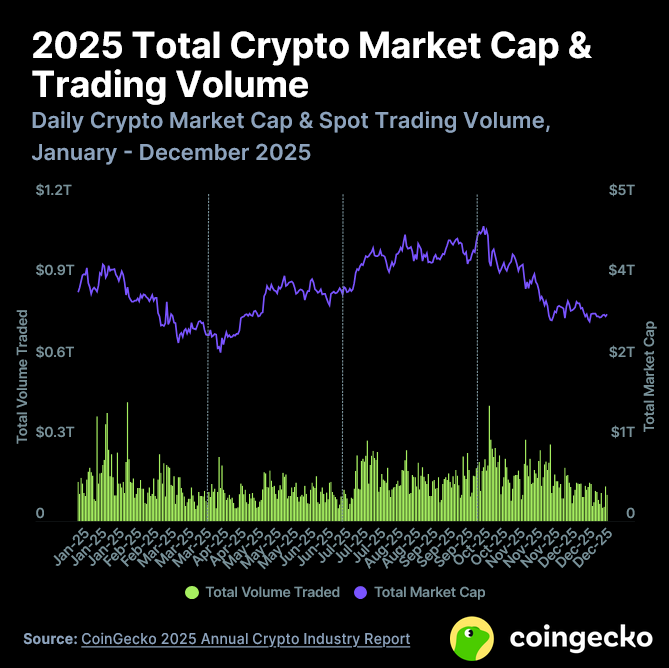
Капіталізація крипторинку у 2025 році: падіння на 10%
Ринок демонстрував високу волатильність, що призвело до першого річного падіння з 2022 року. Найбільше зниження відбулося в четвертому кварталі через зовнішні потрясіння, зокрема оголошення про масштабні мита, що спричинило масові ліквідації.
Максимум капіталізації сягнув $4,4 трлн у середині року, однак до кінця грудня ринок стабілізувався на рівні $3,0 трлн. Середньодобовий обсяг торгівлі досяг піку в $161,8 млрд, що свідчить про підвищену активність трейдерів саме під час різких ринкових рухів.
Одним із ключових тригерів корекції стала рекордна ліквідація 10 жовтня 2025 року на суму близько $19 млрд, яка суттєво посилила тиск на ринок.
Біткоїн: корекція, рекорди та інституційний інтерес
Біткойн, як основний актив ринку, завершив рік у червоній зоні, хоча й досягав нових історичних максимумів протягом періоду. Цей результат став помітним контрастом до попередніх циклів зростання.
Ціна BTC знизилася на 6,4% за рік, тоді як ринок переживав короткочасний пік у серпні та серйозну корекцію після жовтневих подій. Попри це, інституційна присутність залишалася сильною: компанії з цифровими активами (DATCos) накопичили понад 1 млн BTC, що становить більше 5% від загальної пропозиції.
Такий підхід підкреслює довгострокову віру в біткойн як стратегічний резерв, навіть на фоні короткострокового тиску.
Традиційні активи проти крипти: зростання золота та NASDAQ
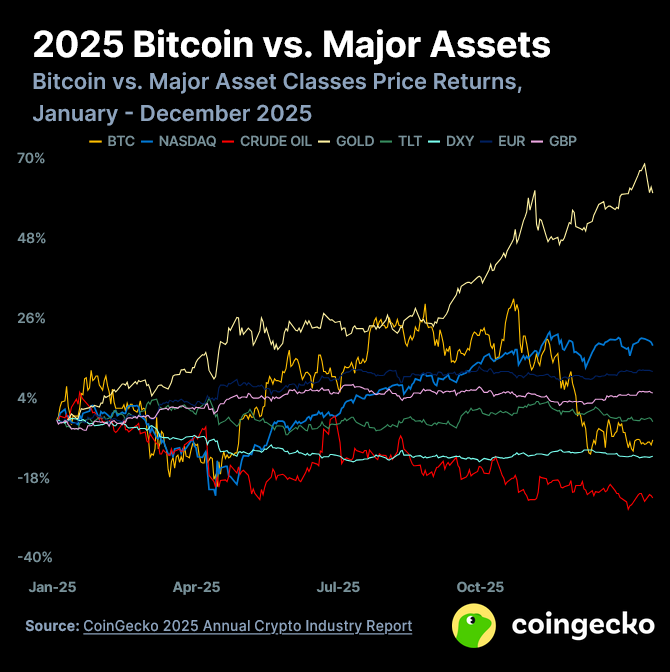
Традиційні активи суттєво випереджали крипту в 2025 році, демонструючи чітке розходження траєкторій. Це пояснюється глобальним попитом на захисні інструменти в умовах невизначеності.
У 2025 році золото зросло на 62,6% завдяки активним закупівлям з боку центробанків, а індекс NASDAQ додав 20,5% на хвилі технологічного буму. Водночас біткоїн завершив рік зі зниженням на 6,4%, опинившись поряд із доларом США та нафтою, які також показали негативну динаміку.
Ці цифри пояснюють, чому багато інвесторів у 2025-му почали активніше диверсифікувати портфелі, поєднуючи крипто з класичними інструментами.
Компанії з цифровими активами: роль інституційних інвесторів
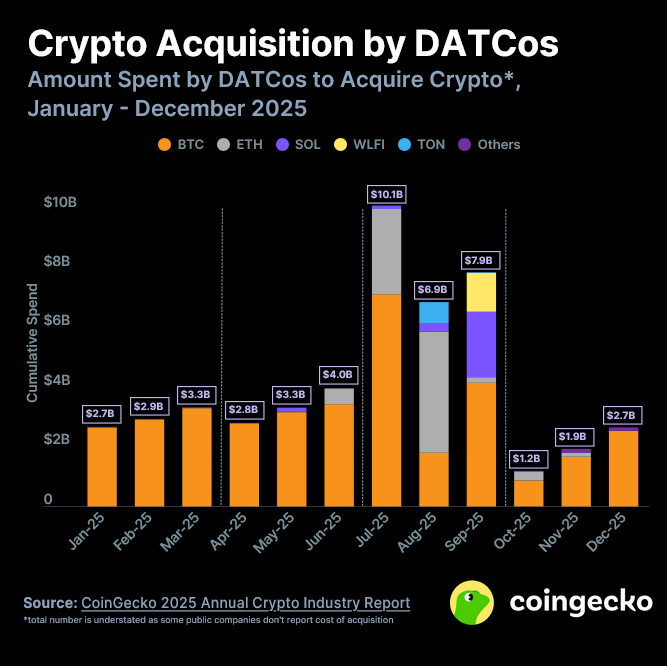
Інституційні гравці суттєво посилили свої позиції в крипто, незважаючи на цінові коливання. Їхня активність стала одним із стабілізуючих факторів ринку.
Загальний обсяг інвестицій сягнув $49,7 млрд, причому половина припала на третій квартал під час відносно оптимістичного настрою. На початок 2026 року їхні активи в крипті досягли $134 млрд, включаючи понад 1 млн BTC та значні обсяги ETH.
Особливо показовим став четвертий квартал, коли компанії перейшли до агресивного викупу акцій та активів на падінні, що демонструє стратегічне мислення.
Стейблкоїни: рекордна капіталізація та ключові ризики
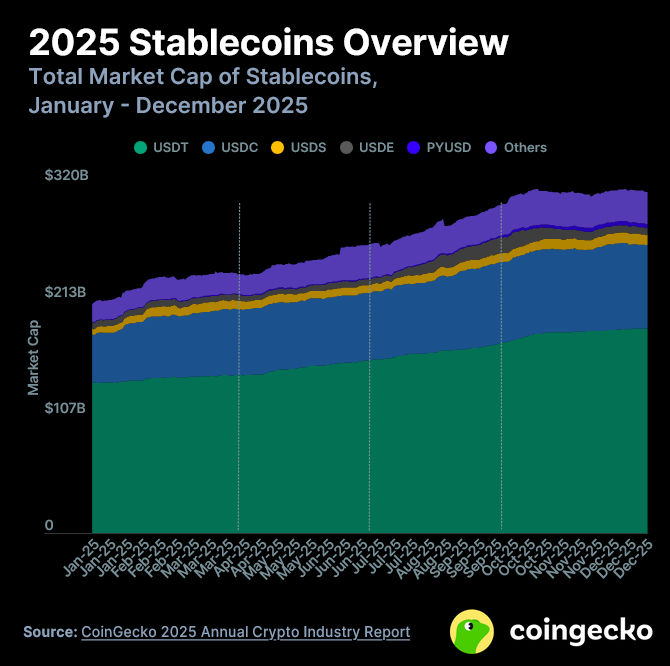
Стейблкойни закріпили статус найстабільнішого та найшвидше зростаючого сегмента, забезпечуючи ліквідність та захист капіталу в умовах волатильності.
Капіталізація оновила історичний рекорд, завдяки інтеграціям у традиційні фінанси та дохідним продуктам. Наприклад, PYUSD від PayPal зросла на 48,4% до $3,6 млрд, тоді як USDe від Ethena втратила 57,3% через відхилення від прив’язки.
Ці кейси ілюструють як можливості, так і ризики в сегменті стабільних монет.
Ринки прогнозів: один із найдинамічніших сегментів крипторинку
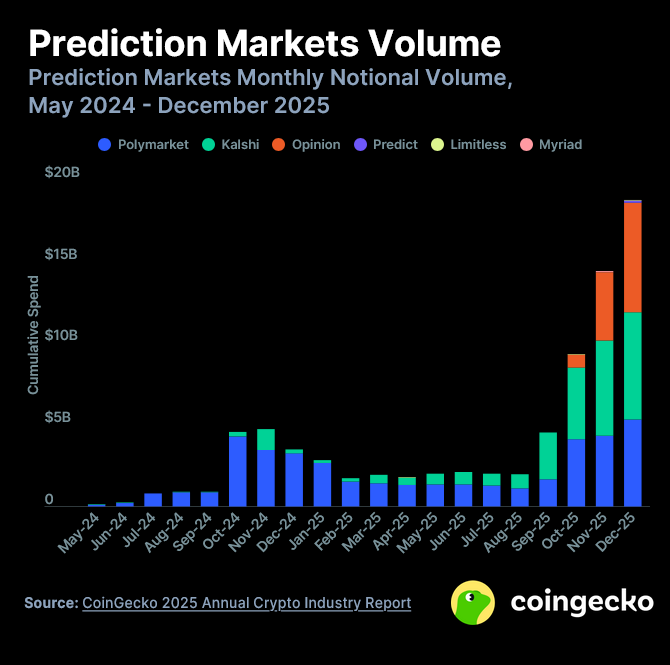
Ринки прогнозів перетворилися на один із найдинамічніших напрямків, приваблюючи користувачів можливістю ставити на реальні події.
Обсяг торгівлі зріс з $15,8 млрд у 2024 році до $63,5 млрд, що підтверджує різке пожвавлення ринку. На початку року домінував Polymarket, тоді як у четвертому кварталі Kalshi зміцнила позиції, зайнявши 39,6% ринку.
Окремо виділяється платформа Opinion на BNB Chain, яка у грудні досягла обсягу торгівлі близько $7 млрд завдяки системі винагород, демонструючи зростаючу привабливість децентралізованих рішень.
Перпетуальні контракти на централізованих біржах: рекордні обсяги
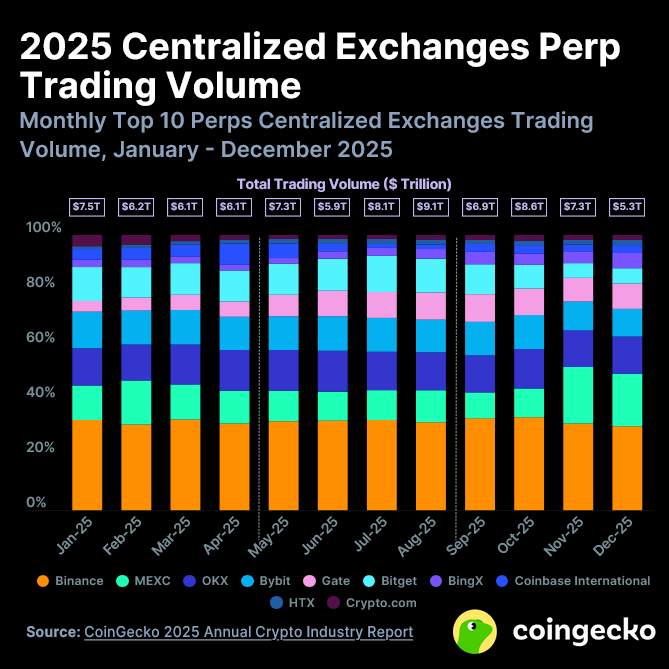
Перпетуальні контракти на централізованих біржах зберегли лідерство за обсягами та ліквідністю, попри всі ринкові потрясіння.
Загальний оборот досяг історичного максимуму $86,2 трлн з піком у жовтні. MEXC вийшла на друге місце, обігнавши OKX та Bybit, а KuCoin перевищила $1 трлн. Ця динаміка підкреслює стійкість топ-платформ та посилення конкуренції.
Перпетуальні контракти на децентралізованих біржах: бум DEX
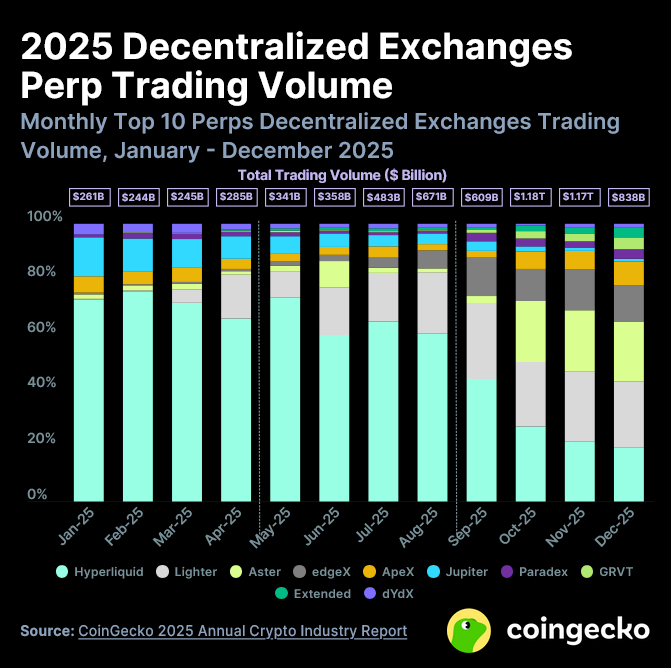
Децентралізовані перпетуали пережили справжній бум, привертаючи увагу завдяки прозорості та стимулюючим програмам.
Топ-10 DEX досягли $6,7 трлн, з різким прискоренням у четвертому кварталі (+80,8%). Частка DEX до CEX зросла до 7,8%. Лідерами стали Hyperliquid, Lighter та Aster, де обсяги сягнули $2,9 трлн, значною мірою завдяки аірдропам та винагородам за ліквідність.
Перехід до зрілої криптоекономіки: підсумки 2025 року
Підсумки 2025 року свідчать, що крипторинок поступово виходить за межі циклів хайпу. Попри зниження капіталізації та високу волатильність, галузь продемонструвала стійкість і здатність адаптуватися до зовнішніх перешкод. Зростання ролі стейблкойнів, активність інституційних гравців і рекордні обсяги в деривативах вказують на посилення фінансової інфраструктури.
Нові напрями – ринки прогнозів і децентралізовані перпетуальні контракти – показали швидке зростання та залучення ліквідності, зміщуючи фокус від спекуляцій до практичного використання.
Загалом, звіт CoinGecko за 2025 рік підтверджує: інституційна база міцнішає, інфраструктура масштабується, а криптоекономіка входить у фазу системного розвитку. Саме тому 2025 рік увійшов в історію як момент, коли крипторинок остаточно перестав бути нішевим експериментом.
Джерело: CoinGecko


Рекомендуємо:
Як купити криптовалюту

Прогноз ціни Біткоїна до $100 000


Статки Чанпен Чжао зросли на $3 млрд за час відсид...
Чому ставка ФРС США вирішує долю Біткоїна та альтк...

SWIFT змінює правила гри: що чекає на криптовалюти...
Доходи від стейкінгу Ethereum впали на 42% за пів ...


Що таке Ethena Finance? Суть синтетичного долара U...
Команда Hamster Kombat оголосила, що другий сезон ...
За 4 роки зафіксовано найбільший приплив інституці...
Глава Ripple пророкує перезавантаження криптоіндус...
Мінфін США хоче скоротити ринок приватних стейблко...
Біткоїн оновив історичний максимум після рішення Ф...
Курс Біткоїна злітає: влада США прикуплять до 5% B...
Європа колише курс Біткоїна: пенсійний фонд Велико...
Аналітик Майкл ван де Попп прогнозує Біткоїну $100...
Чи вплине перемога Трампа на курс Біткоїна?
Аналіз пампів на ринку криптовалют
Екосистема Ethereum: підготовка до нового прориву
Solana проти Ethereum: хто виграє у боротьбі за De...

Тренди криптовалют 2024 року: на що звернути увагу...
CBDC: як цифрові валюти центральних банків змінять...
Скандал із "Біткоїн Ісусом": що сталося з Роджером...
Розвиток криптовалютної індустрії в Україні



Калькулятор
$
USD₴
UAH
Калькулятор